Plagiarism.
When I wrote about Lichtenstein on Sunday I didn’t stop to think what a can of worms that subject is, silly me, and got the longest and most comments on a post so far, even allowing for me deleting two of my own responses to comments (after choosing words with impeccable care in a presentation piece, it’s always a sad spectacle to see a writer blundering around like a beached walrus among the pursuant snipes). In my article I carefully avoided expressing an opinion on the matter, confining myself to observing the foolishness of other parties. Since so many others have screamed PLAGIARISM! In the Lichtenstein matter I feel I now have to stick my foot in.
My school art teachers were probably of a very academic disposition. I wasn't aware enough of the big picture at the time to have a real insight into that. When I found myself at another school later my teacher there worked in an abstract mode but his theory was that painting would come back to figuration. He was a bit stuffy about the the areas where my head resided. By this time I had enthusiastically taught myself a great deal about the history of the subject, working through the phases of modernism, and when I finally arrived at Pop Art, which was making it into the commonplace handbook histories of art by the late sixties (after being celebrated in the colour magazines, which as a kid I hadn’t taken much notice of.)

So, seeing Lichtenstein’s huge ‘Whaam!’ at the Tate in 1970 (I’d only just arrived in London), seven years after it was painted, was a real revelation to me (I'd seen it in books of course, but this was the defining moment). Here we were back at figuration but it was a kick in the pants to my stuffy art teacher, and it kicked over the dividing screen between high art and low art, for in my head it didn't exist (which I guess just means I was paying attention to the zeitgeist unconsciously) and I had been looking for confirmation out there in the world at large. After that moment I had proof of my conviction that such a division was bogus.
Lichtenstein largely abandoned the lifting of comic book panels by about ’66, and his Mural with Blue Brushstroke, found hanging in the lobby of the AXA Center, New York City, painted in 1986, is a masterpiece, unless you’re one of those flat earth types I sometimes refer to here, in which case you will deny it. Our culture decrees that every clot is entitled to their opinion, and so you may do so.
But let’s stick to the issue; the lifted panels. It was necessary that they be as near as possible to the original for the point to work. Lichtenstein was putting a whole style on the wall, and it had to be impersonal and recognizable, with adjustments made not for style, but for succintness and clarity. Inevitably in this age of democratic culture, and Pop Art contributed to the dialogue that brought the change, the originators of the lifted images would have to get their due credit (they cannot be owed cash, since they owned no rights in the images), and that is now part of the story. And so it should be. However a lot of the argument that you'll find on Wikipedia looks cockeyed to me. The art world argues that Lichtenstein altered the compositions, which is irrelevant; my pal Gibbons is in there, defending the quality of the original comic books, which can only be a personal opinion; I challenge you to read the damn things all the way through. Everyone to his opinion regarding quality, but is it worth arguing about a quoted panel? Somebody says: “Some (of the comic book artists) threatened to sue him…” Wha? Where did that come from? Sue for what? The artists never owned the work, so they couldn’t be suing for damages. What for then? The theft of a ‘style’? Is there a legal precedent for that? Can any of these pictures be said to be appropriating a personal style anyway? They all look generic. And they are interesting for that very reason.
And that is the problem with art today: the artist believes he must find a style (or a schtick really) and defend it with his life. And if all the schticks are already taken, he must pull one out of his ass. He must find one, invent one, fabricate one, for he can be nothing if he cannot be original. It’s what I once saw termed ‘the neurosis of innovation’.
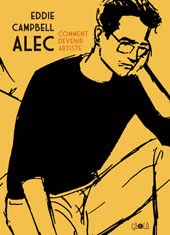
 It’s time to turn to my favourite philosopher, R G Collingwood, once called ‘one of the (twentieth) century's best-known "neglected" thinkers.’ ‘He portrayed art as a necessary function of the human mind, and considered it collaborative, i.e., a collective and social activity.' I used a long and wonderful quote from his Speculum Mentis, or the map of Knowledge (1924) in my How to be an Artist, and I consider that quotation to be at the very heart of what my book is about. Collingwood wrote this other one in The Principles of Art (1938) and I obtained it via David A Pierce who transcribed it on his own site. Take it with a pinch of salt, pepper or whatever condiment you have to hand.
"To begin by developing a general point already made in the preceding chapter: we must get rid of the conception of artistic ownership. We try to secure a livelihood for our artists (and God knows they need it) by copyright laws protecting them against plagiarism; but the reason why our artists are in such a poor way is because of that very individualism which these laws enforce. If an artist may say nothing except what he has invented by his own sole efforts, it stands to reason he will be poor in ideas. If he could take what he wants wherever he could find it, as Euripides and Dante and Michelangelo and Shakespeare and Bach were free, his larder would always be full, and his cookery might be worth tasting.
This is a simple matter, and one in which artists can act for themselves without asking help (which I am afraid they would ask in vain) from lawyers and legislators. Let every artist make a vow, and here among artists I include all such as write or speak on scientific or learned subjects, never to prosecute or lend himself to a prosecution under the law of copyright. Let any artist who appeals to that law be cut by his friends, asked to resign from his clubs, and cold-shouldered by any society in which right-thinking artists have influence. It would not be many years before the law was a dead letter, and the strangle-hold of artistic individualism in this one respect a thing of the past.
This, however, will not be enough unless the freedom so won is used. Let all such artists as understand one another, therefore, plagiarize each other's work like men. Let each borrow his friends' best ideas, and try to improve on them. If A thinks himself a better poet than B, let him stop hinting it in the pages of an essay; let him re-write B's poems and publish his own improved version. If X is dissatisfied with Y's this-year Academy picture, let him paint one caricaturing it; not a sketch in Punch, but a full-sized picture for next year's Academy. I will not rely upon the hanging committee's sense of humour to the extent of guaranteeing that they would exhibit it; but if they did, we should get brighter Academy exhibitions. Or if he cannot improve on his friends' ideas, at least let him borrow them; it will do him good to try fitting them into works of his own, and it will be an advertisement for the creditor. An absurd suggestion? Well, I am only proposing that modern artists should treat each other as Greek dramatists or Renaissance painters or Elizabethan poets did. If any one thinks that the law of copyright has fostered better art than those barbarous times could produce, I will not try to convert them."
* * * *
Cartoonist in court over drink-flying charges. (nobody from this parish). (I edited to add that in so i can say I beat Tom Spurgeon to it.)
My school art teachers were probably of a very academic disposition. I wasn't aware enough of the big picture at the time to have a real insight into that. When I found myself at another school later my teacher there worked in an abstract mode but his theory was that painting would come back to figuration. He was a bit stuffy about the the areas where my head resided. By this time I had enthusiastically taught myself a great deal about the history of the subject, working through the phases of modernism, and when I finally arrived at Pop Art, which was making it into the commonplace handbook histories of art by the late sixties (after being celebrated in the colour magazines, which as a kid I hadn’t taken much notice of.)

So, seeing Lichtenstein’s huge ‘Whaam!’ at the Tate in 1970 (I’d only just arrived in London), seven years after it was painted, was a real revelation to me (I'd seen it in books of course, but this was the defining moment). Here we were back at figuration but it was a kick in the pants to my stuffy art teacher, and it kicked over the dividing screen between high art and low art, for in my head it didn't exist (which I guess just means I was paying attention to the zeitgeist unconsciously) and I had been looking for confirmation out there in the world at large. After that moment I had proof of my conviction that such a division was bogus.
Lichtenstein largely abandoned the lifting of comic book panels by about ’66, and his Mural with Blue Brushstroke, found hanging in the lobby of the AXA Center, New York City, painted in 1986, is a masterpiece, unless you’re one of those flat earth types I sometimes refer to here, in which case you will deny it. Our culture decrees that every clot is entitled to their opinion, and so you may do so.
But let’s stick to the issue; the lifted panels. It was necessary that they be as near as possible to the original for the point to work. Lichtenstein was putting a whole style on the wall, and it had to be impersonal and recognizable, with adjustments made not for style, but for succintness and clarity. Inevitably in this age of democratic culture, and Pop Art contributed to the dialogue that brought the change, the originators of the lifted images would have to get their due credit (they cannot be owed cash, since they owned no rights in the images), and that is now part of the story. And so it should be. However a lot of the argument that you'll find on Wikipedia looks cockeyed to me. The art world argues that Lichtenstein altered the compositions, which is irrelevant; my pal Gibbons is in there, defending the quality of the original comic books, which can only be a personal opinion; I challenge you to read the damn things all the way through. Everyone to his opinion regarding quality, but is it worth arguing about a quoted panel? Somebody says: “Some (of the comic book artists) threatened to sue him…” Wha? Where did that come from? Sue for what? The artists never owned the work, so they couldn’t be suing for damages. What for then? The theft of a ‘style’? Is there a legal precedent for that? Can any of these pictures be said to be appropriating a personal style anyway? They all look generic. And they are interesting for that very reason.
And that is the problem with art today: the artist believes he must find a style (or a schtick really) and defend it with his life. And if all the schticks are already taken, he must pull one out of his ass. He must find one, invent one, fabricate one, for he can be nothing if he cannot be original. It’s what I once saw termed ‘the neurosis of innovation’.
 It’s time to turn to my favourite philosopher, R G Collingwood, once called ‘one of the (twentieth) century's best-known "neglected" thinkers.’ ‘He portrayed art as a necessary function of the human mind, and considered it collaborative, i.e., a collective and social activity.' I used a long and wonderful quote from his Speculum Mentis, or the map of Knowledge (1924) in my How to be an Artist, and I consider that quotation to be at the very heart of what my book is about. Collingwood wrote this other one in The Principles of Art (1938) and I obtained it via David A Pierce who transcribed it on his own site. Take it with a pinch of salt, pepper or whatever condiment you have to hand.
"To begin by developing a general point already made in the preceding chapter: we must get rid of the conception of artistic ownership. We try to secure a livelihood for our artists (and God knows they need it) by copyright laws protecting them against plagiarism; but the reason why our artists are in such a poor way is because of that very individualism which these laws enforce. If an artist may say nothing except what he has invented by his own sole efforts, it stands to reason he will be poor in ideas. If he could take what he wants wherever he could find it, as Euripides and Dante and Michelangelo and Shakespeare and Bach were free, his larder would always be full, and his cookery might be worth tasting.
This is a simple matter, and one in which artists can act for themselves without asking help (which I am afraid they would ask in vain) from lawyers and legislators. Let every artist make a vow, and here among artists I include all such as write or speak on scientific or learned subjects, never to prosecute or lend himself to a prosecution under the law of copyright. Let any artist who appeals to that law be cut by his friends, asked to resign from his clubs, and cold-shouldered by any society in which right-thinking artists have influence. It would not be many years before the law was a dead letter, and the strangle-hold of artistic individualism in this one respect a thing of the past.
This, however, will not be enough unless the freedom so won is used. Let all such artists as understand one another, therefore, plagiarize each other's work like men. Let each borrow his friends' best ideas, and try to improve on them. If A thinks himself a better poet than B, let him stop hinting it in the pages of an essay; let him re-write B's poems and publish his own improved version. If X is dissatisfied with Y's this-year Academy picture, let him paint one caricaturing it; not a sketch in Punch, but a full-sized picture for next year's Academy. I will not rely upon the hanging committee's sense of humour to the extent of guaranteeing that they would exhibit it; but if they did, we should get brighter Academy exhibitions. Or if he cannot improve on his friends' ideas, at least let him borrow them; it will do him good to try fitting them into works of his own, and it will be an advertisement for the creditor. An absurd suggestion? Well, I am only proposing that modern artists should treat each other as Greek dramatists or Renaissance painters or Elizabethan poets did. If any one thinks that the law of copyright has fostered better art than those barbarous times could produce, I will not try to convert them."
* * * *
Cartoonist in court over drink-flying charges. (nobody from this parish). (I edited to add that in so i can say I beat Tom Spurgeon to it.)
Labels: Lichtenstein, plagiarism, writers
posted by Eddie Campbell at
00:14
20 Comments