Thursday, 15 December 2011

Charlotte Brontë manuscript bought for £690,000 by Paris museum
Musée des Lettres et Manuscrits purchases miniature booklet created by author when she was 14 at auction
The manuscript is set in Glass Town, a fictional world created by the teenage Brontës, and contains 4,000 words over 19 pages small enough to fit in the palm of a hand. Formerly in a private collection and previously untraced, it contains ideas later fleshed out in Brontë's novels.
One scene, says Sotheby's book specialist Gabriel Heaton, anticipates one of the most famous episodes in Jane Eyre, in which Bertha, Mr Rochester's mad wife, tries to kill him by setting fire to the curtains in his bedroom.
There's a photo of the little wee book at the link. Isn't that amazing.

Labels:

Wednesday, 21 September 2011

I'm more interested in the similarities between writers, or artists or whatever, than their differences. While reading Rene Girard's The Scapegoat ( Le Bouc émissaire 1982), which I suppose would come under the heading of philosophical anthropology, I find myself sidelined into looking into the picture of his life and times when i come across this paragraph:
Girard began to develop a new way of speaking about literary texts. Beyond the "uniqueness" of individual works, he tried to discover their common structural properties after noticing that characters in great fiction evolved in a system of relationships otherwise common to the wider generality of novels. But there was a distinction to be made:
"Only the great writers succeed in painting these mechanisms faithfully, without falsifying them: we have here a system of relationships that paradoxically, or rather not paradoxically at all, has less variability the greater a writer is." etc.
**************
Online gamers crack enzyme riddle
Online gamers have achieved a feat beyond the realm of Second Life or World of Warcraft: they have deciphered the structure of an enzyme of an AIDS-like virus that had thwarted scientists for a decade.
The exploit was detailed on Sunday in the journal Nature Structural & Molecular Biology, where - exceptionally in scientific publishing - both gamers and researchers are honoured as co-authors.
Their target was a monomeric protease enzyme, a cutting agent in the complex molecular tailoring of retroviruses, a family that includes HIV.

Labels:

Sunday, 4 October 2009

Tom Spurgeon contemplates an article from a couple of months back: On The Subject Of Return Reading
"The author and music writer David Gates penned an article this summer for Newsweek -- where I think he's a staffer -- on the pleasures of re-reading. Gates seems to view re-reading as way to spend time in the company of memorable characters that have touched him in his lifelong give-and-take with literature."
..and selects his favourite handful of books for reading again. Coincidentally, today I just finished reading The Amazing Adventures of Kavalier and Clay for the second time. I picked it up to momentarily derail my brain from an irritating subject and then wrote off most of the weekend in its company.

"In the immemorial style of young men under pressure, they decided to lie down for a while and waste time."

"Dinner was a fur muff, a dozen clothespins, and some old dish towels boiled up with carrots. The fact that the meal was served with a bottle of prepared horseradish enabled Sammy to conclude that it was intended to pass for braised short ribs of beef. Many of Ethel's specialties arrived thus encoded by condiments."

"The pyjamas were patterned with red pinstripes and tiny blue escutcheons. Sammy was wearing a pair that had red escutcheons with blue pinstripes. That was Rosa's idea of fostering a sense of connection between father and son. As any two people who have ever dressed in matching pyjamas will attest, it was surprisingly effective."

It's a wonderful book, and I thought Chabon spoiled things a little by allowing Dark Horse to adapt the Escapist, the comic book character invented by the two young men, into an actual comic book series. I wasn't dismayed enough however to turn down the opportunity to do my own version of the character. This was in 2005, and in the same issue as the last thing drawn by the late Will Eisner. Dan Best wrote the story, which was set at the 1940 Empire City World's Fair, an approximation of the famous NY one. The Escapist has to get himself out of the time-capsule. The New York one was just a couple of feet high, but this one was big enough to imprison a person inside along with the other stuff that was being salted away for future rediscovery a thousand years later. Actually, we didn't know the NY one was so small until we had already committed ourselves. I found a load of old pictures of the NY Fair, which fascinated me for their oddly tinted colours, which I presume are a result of the aging of printing inks, or the yellowing of paper, or the imperfections of early colour photographic reproduction processes, or all of the above. I tried to capture the odd harmonies that I saw in the old photos:


It was twelve pager, but Michael suggested a sharper ending (showing the opening of the time capsule a thousand years later and the odd thing that was found there) that required us to add a thirteenth page. I was glad to see him tinkering with the stories, like I'd hoped Eisner would have done with the New Adventures of the Spirit, though I'm sure his Pulitzer prize-winning time would have been better spent working on his next novel.

Related: I just noticed that there's an excellent portrait of Michael Chabon by Tom Yeates currently at the top of Steve Gettis' Hey Oscar Wilde page
Previous posts on Chabon, including the last that was heard of a possible movie adaptation of Kavalier and Clay.

Labels: ,

Thursday, 23 July 2009

of the innumerable books and pamphlets that have overflowed the nation, scarce one has made any addition to real knowledge, or contained more than a transposition of common sentiments and a repetition of common phrases."- Samuel Johnson

*************
I read and enjoyed The Women's Room back in the day, a couple of years after it first appeared. It was certainly an addition to the pool of human wisdom. But like most books that thump you over the head with their message, I found myself resenting it afterwards. The interview with its author, Marilyn French, who died in May, in the current issue of Bookslut, fascinates me. It fuels my persistent curiosity about the state of profound disgruntlement that seems to be the inevitable fate of creative people of any significant worth. Brittany Shoot is the interviewer:
A (FAILED) INTERVIEW WITH MARILYN FRENCH
Roughly a week after sending them off, I received her pithy answers to my interview questions and went into a bit of shock. A number of my writer friends have had similar experiences; so far, I'd avoided them. Occasionally, you have the misfortune to catch a subject on a bad day, an off week, or maybe you are to blame. Do your questions seem trite without the framework in which they will be placed, without knowledge of the audience that will digest the answers? Did I manage to offend in some way, or is this person simply an uncooperative interviewee?

Labels: ,

Wednesday, 15 July 2009

i quoted part of a passage by English writer Sacheverell Sitwell, in a panel in After the Snooter, and referenced an old photo for the drawing. Of course it's a statement to be cautious about, the kind that can be used to keep an underprivileged people in a state of underprivilegedness. But if we imagine all things equal, it interested me for what it said about the modern world in general:


That is, we are non-active observers of our culture. So it pleased me to to see today's desk diary quotation says the same thing but from the other side of the fence, so to speak. It's from a song by Ooodgeroo Noonuccal (1920-1993), poet , political activist and campaigner for Aboriginal rights:
No more corroboree,
Gay dance and din.
Now we got movies,
And pay to go in.
Finding the whole work online I see the wistfulness gives way to a taking-no-prisoners anger, though the melody jollies along (whether the words are best served by this 1960s folk club style singalong tune is another matter):
Lay down the stone axe take up the steel,
Work like a nigger for a white man's meal,
No more firestick that made whites scoff,
Now all electric and no better off.
and it ends where it all ends:
Lay down the woomera, lay down the waddy,
Now we got atom bomb. End everybody.

Labels:

Monday, 11 May 2009

_______________here's a stirring piece from the Guardian on the writing of one of the great books of the twentieth century.

The masterpiece that killed George Orwell
(It's quite long. A couple of snippets:)
The circumstances surrounding the writing of Nineteen Eighty-Four make a haunting narrative that helps to explain the bleakness of Orwell's dystopia. Here was an English writer, desperately sick, grappling alone with the demons of his imagination in a bleak Scottish outpost in the desolate aftermath of the second world war...

On Jura he would be liberated from these distractions but the promise of creative freedom on an island in the Hebrides came with its own price. Years before, in the essay "Why I Write", he had described the struggle to complete a book: "Writing a book is a horrible, exhausting struggle, like a long bout of some painful illness. One would never undertake such a thing if one were not driven by some demon whom one can neither resist or [sic] understand. For all one knows that demon is the same instinct that makes a baby squall for attention. And yet it is also true that one can write nothing readable unless one constantly struggles to efface one's personality." Then that famous Orwellian coda. "Good prose is like a window pane...

Nineteen Eighty-Four was published on 8 June 1949 and was almost universally recognised as a masterpiece... It was a fleeting moment of happiness; he lingered into the new year of 1950. In the small hours of 21 January he suffered a massive haemorrhage in hospital and died alone... aged 46.


*********
I read on wine label last week that the wine i was drinking is 'iconic'. While i was trying to figure out how a liquid can be 'iconic', I subsequently read that the new release of the great Grange Hermitage is 'iconic'. How can a 'release' be 'iconic'. Somebody make these people stop.

Labels:

Tuesday, 5 May 2009

i just did something I've been meaning to do for twenty years. I read Poodle Springs, the Philip Marlowe novel begun by Raymond Chandler, left unfinished at his death in 1959, and completed by Robert Parker at the request of the Chandler estate for publication in 1989. Chandler left us only four chapters of this story, in which his detective of seven previous novels and numerous short stories is now married and living in what i presume to be an analogue of Palm Springs, California. I probably left it so long on account of the unlovely cover, a hotchpotch of film noir cliches. Instead I feel it should have conveyed something of the Palm Springs locale and the hero's discomfort at being stuck in it. here's a much happier marriage of book and cover, from Chandler's 1949 novel, The Little Sister. I lifted it from Wikipedia, which describes the plot's opening:


"The story opens when mousy Orfamay Quest walks into Philip Marlowe's office in search of a detective. Orfamay is a "small, neat, rather prissy-looking girl with primly smooth brown hair and rimless glasses"

Labels:

Tuesday, 28 April 2009

From an essay by Irvine Welsh, dated 3/5/2007:
"When we live in uncertain times people consequently grow risk aversive and desperate for affirmation: in art as in other walks of life. It’s sobering (for me at any rate) to think that if my first novel Trainspotting was written now, it would probably not be published by a major UK house. After all, it’s far easier to market genre novels along the lines of crime, children’s fiction, chick lit (rebranded romance), horror, etc. than it is a book about Edinburgh schemies on smack."

Labels:

Thursday, 21 August 2008

i see my pal Sean McKinnon at Bent Books still hasn't put our last set of bookmarks online. From that set, here's my portrait of Geoffrey Chaucer.


I was pleased to meet Baba Brinkman, the Canadian writer/performer who does the rap version of Chaucer's Canterbury Tales, at the Brisbane Writers Festival last year while we were both waiting to go onto different panels. He gave an unusual performance on the opening night where he had been requested to thank the festival's eighty sponsors in rap style. I was impressed by his ability to compose a piece of one-off throwaway oratory, though it is probably beyond comprehension outside of the situation for which it was writ. And the naming of sponsors is fraught with complication...

*************

Product placement?

Judged on face value, Shane Meadows' new film is honest, earthy and affecting. Two lonesome teenagers - one British, one Polish - befriend each other on the streets of London. They hang out, get drunk and lope off in doe-eyed pursuit of a foxy French waitress. Half-an-hour in, the Polish dad has an announcement to make. "Today, I went on a fast train through the tunnel, under the sea," he says. "It only takes a couple of hours either way. Not bad, eh?"
Under normal circumstances this remark would sail by unnoticed, but these are not normal circumstances. When one realises that Meadows' movie is entirely funded by Eurostar, it's hard not to hear the line as a sales pitch - a word from our sponsor. The question is, does it undermine the integrity of the film as a whole?
I usually experience this problem from the other end, in those occasional comic book assignments i pick up where depiction of actual real world things, such as a label on a bottle, is forbidden as i found when I put a bottle of Gordon's gin in a scene in Batman and then had to obliterate the label. Most writers would like to be free to name products or commercial entities in dialogue just as people do in real life. I would like a character in my fiction to order a drink by name, just as I do. I have never ever asked for just 'a beer,' or god forbid, 'a whisky'...

**************

For many years, there have been a number of unusual webcams to view over the Net - The “Jenny” cam, The “Watch Corn Grow” cam, The “Fridge” cam, The “Watch Paint Dry” cam and The “Ashtray” webcam. Millions of Internet visitors, over the years, have logged onto these highly popular and slightly whacky cams which have given much enjoyment to many online visitors.
Now starting in March 2008, Internet webcam users will be able to view live, one of the worlds most unusual and riveting ever webcams, The “Watch Whisky Mature” cam.
For the next ten years (3,653 days) sit back and watch this live streaming webcam overlooking a cask of X4 whisky, the world’s strongest whisky, maturing live in the Bonding store at the Bruichladdich Distillery.
(if you didn't ask for a Bruichladdich by name, you'd certainly never get it by accident.)

Labels: ,

Friday, 23 May 2008

it is funny that the two things most men are proudest of is the thing that any man can do and does in the same way, that is being drunk and being the father of their son."- Gertrude Stein.

Something about that quote makes me wonder if it is accurate (I found it identical in a printed and online source.) I find myself wanting to add a comma. The picture is from my new set of author portrait bookmarks for Bent Books of which this is the third shown here. Mr. Bent doesn't have them online yet but you can see the previous sets..

Labels: ,

Friday, 16 May 2008

worst poet' outsells boy wizard

A private collector has paid £6,600 for poems by the man ridiculed as "the world's worst poet". A total of 35 of William McGonagall's works - many of them autographed - have been up for auction in Edinburgh...
William Topaz McGonagall, poet and tragedian of Dundee, "has been widely hailed as the writer of the worst poetry in the English language. A self-educated hand loom weaver from Dundee, he discovered his discordant muse in 1877 and embarked upon a 25 year career as a working poet, delighting and appalling audiences across Scotland and beyond."
Here are a few stanzas from one of my favourites, The Demon Drink
Thou causeth the mother to neglect her child,
Also the father to act as he were wild,
So that he neglects his loving wife and family dear,
By spending his earnings foolishly on whisky, rum and beer.

And after spending his earnings foolishly he beats his wife-
The man that promised to protect her during life-
And so the man would if there was no drink in society,
For seldom a man beats his wife in a state of sobriety.

And if he does, perhaps he finds his wife fou',
Then that causes, no doubt, a great hullaballo;
When he finds his wife drunk he begins to frown,
And in a fury of passion he knocks her down.

And in that knock down she fractures her head,
And perhaps the poor wife she is killed dead,
Whereas, if there was no strong drink to be got,
To be killed wouldn't have been the poor wife's lot.

(BBC news link thanks to hayley campbell)

Labels: ,

Thursday, 15 May 2008

they sicken of the calm, who know the storm" - Dorothy Parker.

CLASH OF THE TIGHTEST!
History's Greatest Drunks square off!
"This month we pit dark horse Dorothy Parker against booze juggernaut Ernest Hemingway.
Round One
Parker orders two Beefeater Gin martinis.
LO: Parker comes out with her tried and true martini jab. They clink glasses and Hem turns on a boyish smile. I do believe he is attempting to charm the lady.
HC: They casually sip and exchange pleasantries. Hem may be onto something, when it comes to attractive men, Parker is known as a pushover.
Round Two
Hemingway orders two Gordon’s Gin and tonics with a splash of bitters.
HC: No surprises from Hem, either. These two have drank together before, in New York, and I don’t think they’re going to need to feel each other out.
LO: I sit here wondering what manner of trick Parker is going to pull. She cannot attack his palette, as she did so effectively with Welles, and she surely cannot outdrink him. I just had a rather odd thought..."
(Modern Drunkard magazine)
************
Channel 4 tv in Britain: (thanks, Hayley)

Artful Codgers- C4 Thursday 15 May 2008 9pm
"Cutting Edge tells the story of the audacious pensioners from Lancashire who conned the art world with a series of fakes sold to museums, galleries and collectors all over the world. Masterminded by 84-year-old George Greenhalgh, and aided by his mother, Olive, 83, son Shaun, 47, faked paintings, sculptures and ancient artefacts in the garden shed of their shared council house in Bolton. The Artful Codgers uncovers the secret world of the most unlikely art forgers in history, interviewing the police who uncovered them, the experts they deceived and their friends and neighbours in suburban Bolton."
National Post has the Reuters version of the story from January 29:
"the Artful Codgers, one London newspaper calls them. Testifying in court, Mom claimed her work was purely routine, like making calls for Shaun because he's too shy to talk on the telephone...
In 1997, a certain Mrs. Roscoe (that's Mom's maiden name) sold Shaun's The Faun at Sotheby's in London, claiming she had inherited it from Roderick O'Conor, a friend of Gauguin, who had purchased it from the Paris gallery. (She supplied a bill from the gallery, forged by her boy Shaun.) A firm of London dealers bought it, to their delight, for only £20,700, and later sold it to the Chicago Art Institute for US$125,000. Chicago's sculpture curator dated it to 1886, called it probably Gauguin's first ceramic and said it was among the Art Institute's most important acquisitions of recent years. It was included in a show, Van Gogh and Gauguin, which went on to the Van Gogh Museum in Amsterdam. It remained on exhibit in Chicago until the call from Scotland Yard last October. It would be there yet, and perhaps for centuries more, if Shaun hadn't messed up the cuneiform.
Shaun has been sentenced to four years and eight months in jail. Mom got off with a year's suspended. Dad came to court in a wheelchair, wearing slippers, with a shawl over his legs; he apologized for being partially deaf, due to his Second World War injury... (lots more)"

Labels: , , ,

Friday, 9 May 2008

i've drawn a new set of bookmarks for Bent Books here in Brisbane. This is my fourth set of six of these little portrait drawings of well known authors. They've printed well, with the subttleties in the greys showing nicely where I've used gouache.These are Truman Capote and Alice Walker. Sean doesn't have the new set online yet, but you can see the previous three sets here, eighteen portraits, and the new set when it goes up will make a total of twenty-four. A couple more rounds and there could be a book in it. (click label below for previous samplings)

Labels: ,

Monday, 4 February 2008


"As I grow older and older
And totter toward the tomb
I find that I care less and less
Who goes to bed with whom."

-Dorothy Sayers.

Labels: ,

Thursday, 23 August 2007

"Rabbi Heskel Shpilman is a deformed mountain, a giant ruined dessert, a cartoon house with the windows shut and the sink left running."

I 've been carrying Chabon's new novel around on my travels in the hope of reading it a second time, but I'm being overtaken by myself going the other way, so I'll say something now. My copy doesn't have the attractive cover design at left. I wonder; why is that? I mean, what theory is at work that decides Australia, or wherever else, needs the one with the careening 1940s car? It strikes me as misleading. Chabon says he started to get the idea for the book while reading Raymond Chandler (interview), but we shouldn't forget that they belong to quite different eras of writing. Chandler is one of those writers that more people have something to say about than have ever read him. Mickey Spillane on the surface may be seen to be mining the same genre milieu, that of the heroic private detective, but he too, in his early 1950s post-war conservative mindset was a million miles from Chandler, as noted in this insightful piece by Will Cohu in the Uk's daily Telegraph:
His (Spillane's) books were strip-cartoons, written in brutal prose, with an insistent reactionary heartbeat, the thump-thump of the first person singular and the fist as Hammer smashed another face to a bloody pulp. Chandler aimed for the elite; Spillane for the mob. His books were descendants of the "penny dreadfuls" - mass produced, widely distributed and cheap. Their artwork was almost pornographic (I, the Jury showed a picture of Mike Hammer pointing a gun at a semi-clad woman). He flaunted his lack of literary credentials, calling himself a "writer" and taunting the "authors". He developed an anti-aesthetic.
Chabon's detective story has the literary air of Chandler, with the shiny polished lines: "He wasn't a handsome kid. He had a second chin and the hint of a third, without the benefit of a first." but Chabon's milieu is our own feminized world in which the cop's ex-wife is his superior officer, and in which the details of his partner's kids' 'polar bear jammies' are noted. I don't remember the presence of any kids in any of Chandler's novels, though I'm sure I could be mistaken.

But then it is not exactly 'our own' world, though we might say that in our world an author doesn't need to take time out to explain the concept of 'alternative history.' It wasn't exactly unknown in Chandler's years, given some currency by JC Squire's 1931 anthology If it had Happened Otherwise, containing among other 'what ifs', If the Dutch had Kept Nieuw Amsterdam by Hendrik Willem Van Loon, but five or six decades of science fiction broadcast into our living rooms have made it a commonplace. However, as occasionally happens with a book you have no intention of not reading, I sat down to The Yiddish Policemen's Union without having read or heard a single word about its unusual and imaginary setting. For a while I was mystified and kept on my theoretical toes wondering when and where the hell this was taking place, because the author hasn't posted any signs to tell us. He mostly leaves us to figure it out, though by the time things get complicated he had me looking extratextually for a specific answer. Chabon's theoretical Yiddish community is thoroughly worked out in its hierarchies and underworld with its slang, where a gun is a 'sholom' (peace) and a mobile phone is a 'shoyfer' (ritual ram's horn). I love this book. Y'know, I really should just cancel a week of stuff and read it again.
*************

At some point in the draft of the above I was speculating on Chabon's difficulties in following up on his Pulitzer winning Kavalier and Klay when my thoughts turned to another great writer who ran into follow-up trouble, Ralph Ellison. (and I love this title...)
The Invisible Manuscript- Washington Post-Sunday, Aug 19-

Ralph Ellison died leaving four decades'worth of scribbled notes, thousands of typed pages and 80 computer disks filled with work on an ambitious second novel. For 14 years, a pair of literary detectives labored to fit the pieces together. Now they're ready to share with the world.

I almost wrote about Ellison's supposed writer's block in my Fate of the Artist but sensed that I was way out of my depth:
It was only after Ellison's death that Fanny Ellison chose Callahan to become literary executor. This was an honor, but it soon became clear it was also a Herculean task. Manuscript pages, computer disks and scribbled notes lay helter-skelter, everywhere in his home. Ellison had not suffered from writer's block, after all. He had writer's fury. He had written and written and written. A gush of words, and chapters and notes about the chapters. There were background notes -- musings on writing and America and fiction -- much of it also beautifully written; notes about plot outlines and more characters, built word by word, then buried under more notes. It was a spouting gusher of artistic creation, fat manuscripts covering other fat manuscripts, almost all related to that second novel.

(via Bob Morales)

Labels: , , , ,

Wednesday, 11 July 2007

"I don't like drunks in the first place and in the second place I don't like them getting drunk in here..."

Saw it in the bookstore, had to have it (published march 2007). When I went through a period of obsession with the American 'hardboiled' school of crime fiction, thirty years ago, it tended to boil down to three important writers; Dashiell Hammett, Raymond Chandler, Erle Stanley Gardner. In the way of things now, there is a greater sharing of the loot, and all those fellows who were given the bum's rush before, now get invited back in. Fourteen writers are represented by one story each, including all members of the well known triumvirat above. There are 512 pages and the original publication dates range between 1926 (Hammett) and 1942 (Woolrich).
Carroll John Daly was apparently a big name in his time but fell by the wayside. (article: In Defense of Carroll John Daly) Now I get to take the measure of his original reputation. His story in here, retitled from its original 'The Flame and Race Williams' for some unstated reason, is the longest in the book at 140 pages, and was agreeable enough as these things go. It should be said of course, that it is probably necessary to approach most of the stories in this book, if not with a driver of academic enquiry, at least with a back seat passenger of historical curiosity.
Cornell Woolrich had always been hinted at as a possible great. So many of his things made great movies, and Hollywood ain't finshed (e.g.Banderas and Jolie in Original Sin (1947 book)). His story in here is one of the memorable ones, a peculiar manipulation of fate that depends quirkily upon coincidence at exactly the point when the writing manuals tell us to avoid it, and I like it for that very reason, and others of course.
Paul Cain is a writer I had never read before and his short piece in here impressed me. It opens the book:

I'd been in Los Angeles waiting for this Healey to show for nearly a week. According to my steer, he'd taken a railroad company in Quebec for somewhere in the neighborhood of a hundred and fifty grand on a swarm of juggled options or something. That's a nice neighborhood.
My information said further that he was headed west and that he dearly loved to play cards. I do, too.
I'll take three off the top, please.
I missed him by about two hours in Chicago and spent the day going around to all the ticket-offices, getting chummy with agents, finally found out Healy had bought a ticket to LA, so I fanned on out there and cooled.
Pass.


Raymond Chandler is represented by Red Wind. With Chandler you always feel that you're getting more than just prose, and I'm not just referring to his use of language. I often sense of poetic mystery in Chandler. This story is a mystery whose solution I had to strain to grasp, and having been grasped, I found myself explaining it to a friend, finding that my grasp of it was only temporary. Here's a great chandlerism from the second page:

The kid said:' I don't like drunks in the first place and in the second place I don't like them getting drunk in here, and in the third place I don't like them in the first place.

Almost all of the stories appeared originally in the celebrated pulp magazine Black Mask, the scholarship of which has lately acquired a significant online presence.

And of course we lament the fading of the Pulp mags. Nothing lasts forever. They gave way to the modern paperback, which must be understood as more than just a change of format. This article is informative: Raymond Chandler and the Mass Market: The Effects of the Paperback Revolution on Professional Authorship in America.
*********

Regarding my interest in the crime story, the piece I spoke of in my post of 3 feb can be seen in the new Deevee which goes on sale today.

Labels: ,

Tuesday, 27 March 2007

"I'm a very lucky artist. I make my living from it."

The copyright/plagiarism issue has been shuffling along since we last spoke of it here, when I linked to Jonathan Lethem's article in Harper's of January 30.

Writing in the free world : Jonathan Lethem explains why copyright laws stifle creativity and why he's giving away the film rights to his new novel.---Salon.com March 25 (link via Neil Gaiman)
In response to an observation about the meagre $6,000 dollar advance for his first novel: " Sure, but it wasn't strengthening of copyright control that allowed me to make more money after that; it was because I found some readers. Even if my rights were Kryptonite and lasted 1,000 years, if no one read my books, they wouldn't be worth a penny. The economy of human attention is a very precious one, much scarcer than any other. I'm lucky to be in the position of having anyone notice that I've given something away in the first place."
"I'm a very lucky artist. I make my living from it. I didn't know if I ever would. I'm very persuaded by the image that Lewis Hyde offers of an artist who is, by definition, in whatever medium, or whatever level of success or whatever culture, in the practice of culture-making; participating in culture by making stuff is inherently a gift transaction and a commodity transaction. And it always will be. The question is how do we affirm and clarify this relationship? Because it's a very weird one -- making commodities that are also gifts.

Lethem already made special reference to Lewis Hyde, and his concept of 'the gift economy' in the Harper's essay. This review (I think nov 2005) by JoAnn Schwartz of Hyde's The Gift: Imagination and the Erotic Life of Property (Vintage Books, 1983) goes a long way to explaining what Hyde was talking about.
"Hyde is deeply interested in the transformative gift: the gift that changes us profoundly, often received in the form of psychological healing or spiritual teachings. An important aspect of a transformative gift is that the transformation is not instantaneous; it requires the recipient to undertake some extensive and often difficult inner work in order to effect the transformation completely. What motivates us to undertake this labor? In general, it is a feeling of love and gratitude toward our teacher or therapist. This can lead to problems in today's market economy, where healing and teaching are frequently sold rather than freely given. After all, even a gifted teacher, therapist, or spiritual guide must eat! It is nonetheless possible for an element of the gift economy to circulate above the cash.

In science, as elsewhere, the circulation of gifts produces and maintains community, whilst the conversion of gifts to commodities fragments or destroys that same community. However, we are now witnessing the commodification of ideas within the scientific community. Universities and industrial laboratories, which used to produce basic research that was released into 'the public domain' now patent and otherwise protect their research. Discoveries emerge not as contributions but as proprietary ideas for which users must pay a fee, a usury. This trend began in the late 1970's and early 1980's with biotechnology, but here and now, at the end of the millennium, it seems to have spread to most fields of scientific inquiry. How does the "group mind" necessary to produce theoretical physics/chemistry/biology survive the free-market?"


Patent Office (UK) wants evidence to justify new copyright exceptions for artists. (again via Neil)
The Open Rights Group (ORG) is corralling information.
contribution from one John Harding, mar 22: "The conventional publishing industry does a valuable job, but only where there is large money to be made to fuel its necessarily ponderous machinery. A few years ago a friend of mine who was running a chamber music summer schools for amateurs wanted to let them play a pleasant little work by, I think, Panufnik, or possibly Penderecki. They contacted the publishers, asking to buy parts, but were told that the parts were not on sale, but could be hired. The cost would be £100. The work lasted perhaps five minutes. It is not a work that any string orchestra would think of scheduling into a programme. The publishers have effectively killed it.
The internet, software, desktop publishing and the existence of people like the founder of Merton Music, have made possible the creation and dissemination of work that would never bring profits to traditional publishers. We are living in exciting times, whose surge of intellectual activity will be seen in retrospect as putting the Renaissance in the shade.
Of course the corporations want to keep a strangle hold on it.
The move towards criminalising copyright violation significantly changes the picture. A single fine at the level sought by corporate lobbyists could ruin someone who would currently be able to achieve amicable settlement of an honest mistake under civil law. There will be people who will no longer dare act on common sense."


Joyce letters court case settled--BBC News Sunday, 25 March 2007
"A US university professor has won the right to quote letters between Irish writer James Joyce and his daughter in a book after settling a court case".

I got the link for that one at Ownit- The creative London Intellectual Property Advice Service where you can find regular updates on such matters as
Will Charwoman take Family Guy to the cleaners?--19 Mar 2007
Disney gets tough with students acting as nuns this week... etc

*****

more on 300, the movie, (via Heidi) Men Gone Wild by David Denby in this week's New Yorker:
"...perhaps the nuttiest film ever to become an enormous box-office hit. Based on a graphic novel by Frank Miller, the movie is a porno-military curiosity—a muscle-magazine fantasy crossed with a video game and an Army recruiting film."

"Pop has always drawn energy from the lower floors of respectability; this movie, in which fan-boy cultism reaches new levels of goofy chaos and sexual confusion, draws energy from the subbasement."

Made in a time of frustration, when Americans are fighting a war that they can neither win nor abandon, “300” feels like the product of a culture slowly and painfully going mad."

******

via circulating email of notable quotations.
"The word "genius" isn't applicable in football. A genius is a guy like Norman Einstein." --Joe Theisman, NFL football quarterback & sports analyst.

Labels: , , ,

Sunday, 25 March 2007

The day I was mistaken for an author.

I want to start an occasional series of anecdotal posts about travelling. First up, a trip to Europe in November 2001 that took me and Anne through Singapore. Earlier I had answered a few email questions for my pal Cheng tju ( who once gave me an old copy of Malaysian artist Lat's Town Boy, soon to be published in the States by my publisher First Second) to put together an article for the Straits Times, the English language paper of Singapore, in connection with the upcoming release of the From Hell movie. I had sent ahead an official photo from a set that Liz Pickering recently came round and shot as my last set was taken some ten years previously and they were starting to look like a memento of some other bloke.
Anyway, we boarded the 707 of Singapore Airlines at Brisbane airport November 10 and grabbed a newspaper to browse, when there in front of me was my own mug.

You should be able to click-enlarge that enough to read it. BUT THE ARTICLE WAS ABOUT SIMON WINCHESTER !!!- author of The Surgeon of Crowthorne( 1998).
"(from interview) There's a book by Jonathan Green called Chasing the Sun, which is a history of dictionary making. And I was actually reading this book in the bath one winter's day about two years ago. And there was a footnote which said, you know, in a rather offhand way that, of course, readers will be familiar with the extraordinary story of Dr. W. C. Minor, the American lunatic murderer who was imprisoned in Broadmoor and became a prolific contributor to the OED.
I remember vividly sitting up in the bath and saying I've never heard of this story. And I rang one person in your office, Elizabeth Knowles, who you'll know well, I dare say, and said, "Elizabeth, do you know anything--" well, first of all, I apologized and said, "It's rather vulgar. I'm calling you from my bath in America, but do you know anything about this chap called W. C. Minor?"
And she said, "Well, as a matter of fact, I know rather more about him than most people because I wrote a paper about him for a journal, a quarterly, I think, published in Madison, Wisconsin called "Dictionaries." And if you'd like, if you get out of the bath, I'll fax it to you and you can read it when you're'toweling yourself dry," and so she did.
And I read it and I thought if I can get access to the Broadmoor files on this man, then perhaps there's rather a good book to be written."


Cheng Tju, when we met up with him at the other end of the flight, was crestfallen. Eddie Campbell was in fits of mirth. The Campbell piece appeared a month later with the same photo, confirming in the minds of many in Asia that English people all look alike. As for Simon Winchester, did he get a tearsheet from his publisher's publicity department and wonder who the Hell that other bloke is?

Will the real Simon Winchester please stand up?


I know what it is! it's that thing we do with the hand on the chin, isn't it.

Labels: , ,

Wednesday, 14 March 2007

"Pulp writing at its worst was never as bad..."

Ah, one of those blessed days when those of us who have inflicted upon ourselves the duty of daily blogging realize we can get by with a few links to elsewhere. But what to use for a title? All the puns on 'link' must be used already. This is Heidi's latest: Linkie winkins from all over

One of the things she links to is the The Daily Cross Hatch interview with Jeff Smith. His experience with self publishing started much like my own:
"Part of the plan was that I was going to reprint the collection in books, to always keep the story available. I always wanted to do the big one volume edition, too. One of the things that I wanted to do was change the model of comics and make them restockable. You needed the early parts of the story to always be there, so when number one sold out, put 5,000 more out on the market. The next stage was to go into the trades, and keep those in stock. It was very necessary for people in the middle of the story to be able to very cheaply and very easily go back and get those."
I have for some time argued that an explanation of what a 'graphic novel' is should start with this kind of rationale. The market for comic books developed an appetite for longer and more complex and intelligent narratives and the delivery process adapted incrementally to satisfy that appetite (from different kinds of serialization models through to conceiving, completing and releasing a long comic strip in one book, along with the concomitant economic reonfigurations). To just decide that a 'graphic novel' must be a certain size and then go back through the history of the world with a measuring tape, as some are inclined to do, is, I suppose, the kind of simplemindedness you'd expect in the comic book environment.

Speaking of the 'graphic novel' (always to be spelled with the apostrophes), I hate to think that I have become by default the muggins whose job it is to explain the object to the world. In this capacity you will find me in the new issue of World Literature Today which is dedicated to the subject and is available online as well as in print. I wrote a 400 word sidebar for it (page 13) explaining why the term is hopeless. It's the easiest hundred bucks I ever made; it took me longer to write the invoice than the article. (seriously)

Yesterday I was quoting Walter James talking about No Orchids for Miss Blandish, a novel by James Hadley Chase and a series of connections wafted through my head later in the day. It occured to me that I didn't know anything about Chase, apart from, as it happens, having once read the book in question. So I checked Wikipedia (from where I nicked the image at left).

He was "British... at different times... a children's encyclopedia salesman and book wholesaler before capping it all with a writing career that produced more than 80 mystery books.
...after reading James M. Cain's novel The Postman Always Rings Twice (1934), he decided to try his own hand as a mystery writer... with the help of maps and a slang dictionary, he composed in six weeks No Orchids for Miss Blandish (1939). The book achieved remarkable popularity and became one of the best-sold books of the decade.
...Most of his books were based on events occurring in the United States, even though, he never really lived there. In 1943 ... Raymond Chandler successfully claimed that Chase had lifted whole sections of his works in "Blonde's Requiem". Chase's London publisher Hamish Hamilton forced Chase to publish an apology in The Bookseller."

PLAGIARISM! rears its ugly mug yet again.

When I read Miss Blandish I had a nagging feeling that there was something more than a little bogus about it. It didn't quite belong among the other great hardboiled crime stuff I was reading. And so I never picked up any of his other books. They were all over the place earlier in the '60s, but they never looked like they were for me. the covers always sported characters who could only be interested in crap like sex and money when there was obviously more important stuff to be thinking about like whether the universe was going to come in on schedule or whether we'd all be et by Galactus.
However, his book Just Another Sucker was filmed in 1998 as Palmetto 'a very underrated neo-noir' starring Woody Harrelson and Elizabeth Shue, but I haven't seen it..

Coincidentally, the article on Spillane in the World Lit mag linked above shows Chandler at odds with him too. "Pulp writing at its worst was never as bad as this stuff." (source given) I was finally reminded of a moment in Ian Fleming's Live and let Die where James Bond arrives in New York to find all the hoodlums trying to act like characters out of Mickey Spillane. Now an English author was leading the field. And on his own, very English terms.

*********
An email from movie producer Bill Horberg, who happens to be a big fan of Mickey Spillane, five minutes ago:
eddie
i'm sitting here with a copy of The Black Diamond Detective Agency in my hand.
it's pretty damn cool.
I think the size is actually great having fretted about it from the beginning.
And the colors came out nice although you'll be the judge of that with your artist's eye.
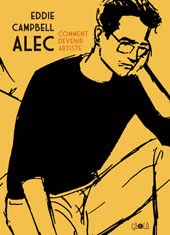
It's a magnificent thing and so satisfying to arrive at this moment of completion after such a long journey.
Now I've got to keep up my end of the bargain and try to get a goddamn film made!

Labels: , ,

Tuesday, 13 March 2007

"The sap's got hot pants for that judy."

Talking of reading the other day reminded me of one of my favourite all-time authors, a man long out of print and probably unknown to all my readers here. I picked him up in the first place when I was writing Doing the Islands with Bacchus, and the work is so saturated with his influence that I can't reread my own book now with exprienceing a warm recall of the time spent reading Walter James (biog details hard to come by. guessing ca 1907-ca 1980). He was an Australian wine maker who wrote several volumes of diaristic thoughts on just about everything, but mostly about winemaking and his enthusiasm for reading. They were published between 1949 (Barrel and Book,) and 1957 (Antipasto) and amounted to six volumes, of which I've managed to find four. The first passage here refers to what I was writing about on march 10; there isn't enough time to read all I want to read.

“HOW SHAMEFULLY DULLWITTED other men’s memoirs make me feel. Quiller-Couch says in Memories and Opinions that at seven or eight years he was reading Greek, but in old age he regrets that “real scholarship” he “had never reached, but chased after with envy.” And here I am over forty and my sons both over “seven or eight” and none of us has a word of Greek beyond, in my own case, the names of one or two resin-flavoured liqueurs. I know most of the Greek authors in translation and I know the best of the translations, and that is as far as it is likely to go with me. However, learning is mostly a matter of relativity: few of the folk hereabouts have even heard of the translations. This reflection gives me a pleasant feeling of warmth in the pit of the stomach. I experience that voluptuous complacency which tickles us with the idea that we know something.”

Oh to have written a sentence like that last one. Some time later we find him sitting up reading a cheap crime thriller. This is apposite bacause I have just heard that the first printed copies of my new book, The Black Diamond Detective Agency have arrived at the publisher's office, and I will want to talk about crime fiction before it gets out into the stores in a couple of months from now.

“SOME TALK IN PARLIAMENT of banning the film version of “No Orchids for Miss Blandish” so I made a call on the circulating library; threatened books are usually worth reading and this one certainly is. It kept me awake till two o’clock this morning and that is more than the English poets could do. It is the usual stuff about the kidnapping of the meat king’s lovely daughter by rude gangsters one of whom falls for her. Everyone is rodded-up (armed with revolvers) and there is a lot of slaughter. The gunmen are rubbed out by the feds and the lovely daughter takes a rocker from a hotel window because she feels too soiled to go home. It is all very moral.
The joy of the book is its English. The sap’s got hot pants for that judy (the ingenuous gentleman is in love with that young lady;) I gave the Tribune the bum’s rush (I gave up my employment with the Tribune); you’re strung for a sucker (you are a simpleton); the guy’s taken a run-out powder on ya girlie (the gentleman has transferred his affections); I’m getting ya outta a jam (assisting you from a contretemps); Aw nerts! (You are talking nonsense); we’ll be fried (electrocuted) for this; ya gotta snap outta it girlie (you must cease idling, young woman). The people who used these phrases before the feds rodded them were not altogether scamps; they had some nice ways. For instance, whenever the arch-villain wanted a smoke “He gave himself a cigarette.”


One last then I must get back to the drawing board:

"A pretty woman who came to dinner last night gave me two packets of seeds—one of angelica and one of lovage. 'I don’t expect they’ll grow,' she remarked; 'I bought them purely for the sake of their names.' How pleasant it is to meet people as feckless as oneself!”

Labels: ,